
When a CRM is temporarily unavailable, a Contact Form 7 workflow can accept an inquiry into durable storage and deliver it later. A broker gives a worker somewhere to receive that work, but the broker and CRM have separate success signals. Choose a broker by what it does when a publish response is lost, when a worker crashes after the CRM write, and when an operator needs to replay a failed item.
Define the handoff you can support
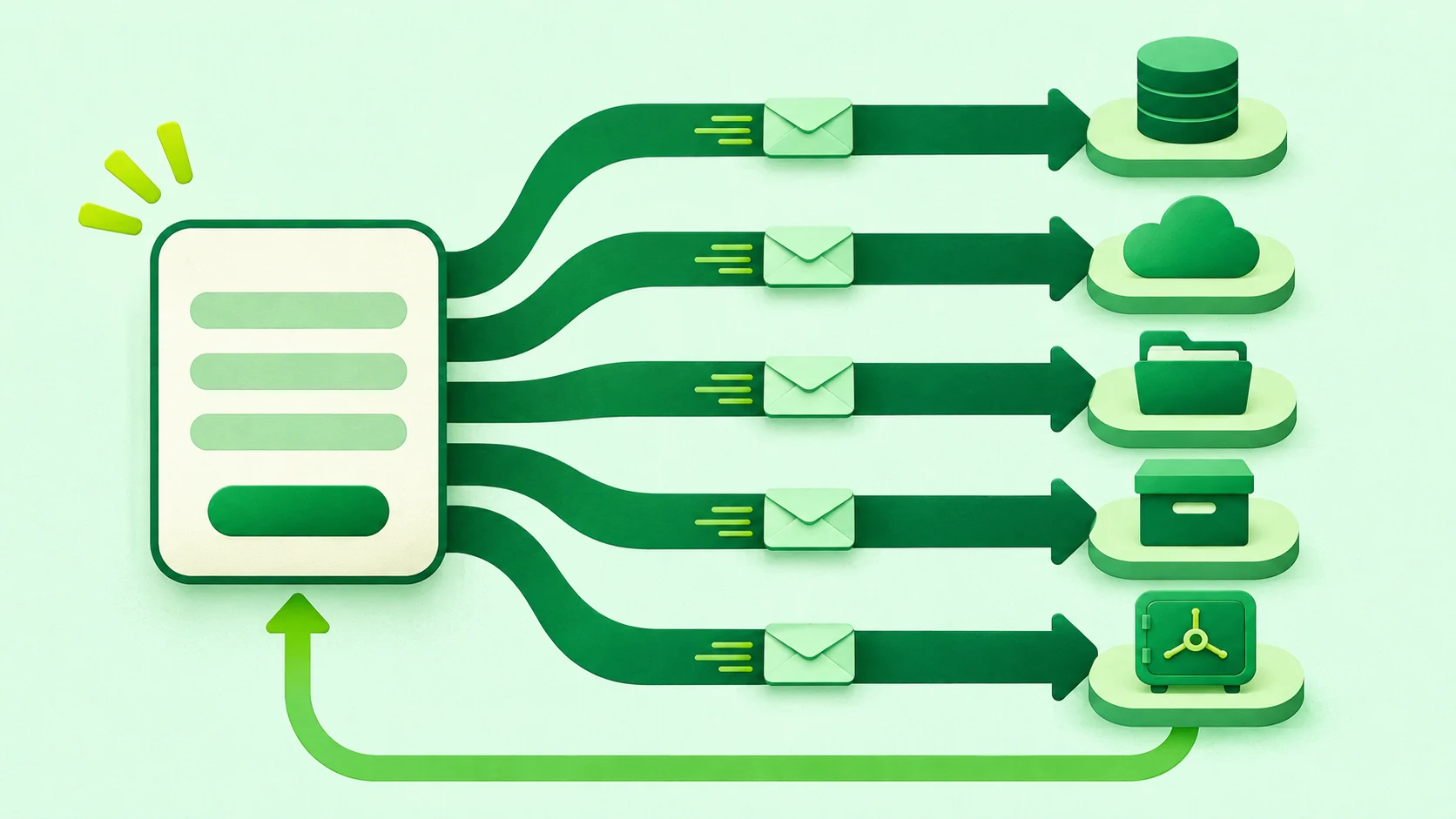
Consider a repair company that creates a CRM inquiry and may notify an assignment service. Store a stable delivery identifier and the minimal lead reference before reporting durable acceptance by the connector. If the connector first writes to its own database, an outbox lets a worker retry publication from that record. Publish a reference rather than an attachment or full set of form fields when the worker can retrieve the approved data privately. Track CRM confirmation separately from acceptance, broker acknowledgment and notification.
A consumer can fail after the CRM commits and before the broker receives an acknowledgment. The next delivery must reconcile the existing CRM record or use an idempotent destination operation. A feature labeled exactly-once can have a narrow scope, such as its delivery protocol or a publisher deduplication window. It cannot make an unrelated external write atomic. This comparison uses official broker documentation, without firsthand performance claims or a native CF7 integration claim.
Compare the five delivery models
| Product | Data path | Best starting fit | Check first |
|---|---|---|---|
| RabbitMQ | AMQP routing, confirms and acknowledgments | Self-managed routing | Quorum sizing and unroutable messages |
| Amazon SQS | Standard or FIFO queue, visibility timeout and delete | AWS workers and managed queues | Request charges, timeout and FIFO grouping |
| Google Cloud Pub/Sub | Topics and independently acknowledged subscriptions | Google Cloud fan-out | Pull and regional requirements for exactly-once delivery |
| Azure Service Bus | Queues or topics, Peek-Lock and settlement | Azure workflows needing sessions or broker deduplication | Tier eligibility and lock renewal |
| NATS JetStream | Persistent streams and durable consumers | NATS teams needing work queues or replay | Retention, deduplication window and replication |
RabbitMQ
RabbitMQ fits teams that need explicit routing, such as one exchange with bindings for CRM delivery and assignment. Publisher confirms let the producer learn what happened at the broker; consumer acknowledgments tell the broker when a delivery is complete from the consumer’s perspective. These are separate signals. For AMQP 0-9-1, use the mandatory flag and handle returns if a route is required. A positive confirm alone is not proof that a message reached the intended queue.
Quorum queues offer replicated, durable queues, with operating choices around node placement, leader health and delivery limits. Verify broker and client behavior when a node or worker goes offline. Use prefetch to bound unacknowledged work so one consumer cannot take more than it can finish. RabbitMQ server and its core plugins are principally MPL 2.0, with separate component notices. Compare node, monitoring and operator costs with the price of a managed offering if you do not want to run a cluster.
Amazon SQS
Amazon SQS is a fit for an AWS worker that needs a managed queue without running a broker cluster. After receiving a message, the worker has a visibility timeout during which it can finish and delete it. If processing is slow, extend visibility according to the worker’s policy. A timeout can make the item available again, so assume work may be redelivered. Test what the connector does after an expired timeout, including how it finds a previously written CRM record.
Standard queues can deliver duplicates or messages out of order. FIFO queues use message groups for ordering and provide a bounded send deduplication interval. Choose group keys around independent ordering needs; grouping every lead under one key can serialize work unnecessarily. Model managed request charges using sends, receives, deletes and retries, including empty polls and payload size units. Check the regional pricing page, batching behavior and transfer costs before estimating a monthly budget.
Google Cloud Pub/Sub
Pub/Sub fits a Google Cloud pipeline in which multiple subscribers need independent progress. Publish one lead reference to a topic and let the CRM worker and the assignment subscriber acknowledge their copies independently. This keeps a slow assignment service from forcing the CRM worker to repeat an already confirmed write. Set an acknowledgment deadline and use the client library’s lease management where supported; understand what happens when the worker stops extending it.
The exactly-once delivery option applies to pull subscriptions, including StreamingPull, within a cloud region and based on Pub/Sub’s message ID. Push delivery does not support it. Repeated publishes may still create distinct messages, and a CRM commit remains external. Price the managed service using publishing and delivery throughput, subscriber count, retained data and applicable transfer charges. Test replay and message retention on a disposable subscription so operators know which older data they can retrieve.
Azure Service Bus
Service Bus fits an Azure workflow that wants managed queues or topics and a choice of settlement actions. A worker using Peek-Lock can complete a delivery after committing work, abandon it for another attempt or move an unrecoverable item to the dead-letter queue. A lost or expired lock can cause another delivery. Plan renewal for long-running CRM calls and reconcile after a settlement failure before attempting another create.
Service Bus duplicate detection works with message identifiers inside a configured history window. Standard and Premium support it; Basic does not. Evaluate sessions when related updates must stay together, and check the tier, queue or subscription settings and SDK in use. Pricing varies by tier and region, with different operation, connection and dedicated capacity considerations. Compare that recurring cost with the time your team would spend operating a broker.
NATS JetStream
JetStream is an option when a team already runs NATS and needs persistence beyond Core NATS messaging. Store selected subjects in a stream and process through a durable consumer with explicit acknowledgment. Choose the retention policy based on whether the data must support replay or should be removed after work completes. Ack wait and delivery limits affect how long failures remain active and what signals an operator can use to recover.
The Apache 2.0 NATS server can be self-hosted. JetStream supports publish deduplication using a message ID over a configured window and confirmation of acknowledgments. Neither addresses a CRM write outside the broker. Use file storage and suitable replica placement where the workflow requires durability across node failures. Verify space and retention limits as part of that decision. Budget server, storage and operator time or review a managed provider’s separate terms.
Choose by testing the crash you expect to see
Use a test tenant and stable synthetic delivery keys. Lose a publish response and retry with the same identifier. Stop a worker before a CRM write, then after the write but before acknowledging. Let an unprocessable item reach the retry limit and confirm the operator can inspect it, see the original delivery key and replay it once the cause is fixed. Check how you expose queue age, retry attempts and confirmed writes without including submitted fields. Read the batch reconciliation guide if the worker sends multiple leads in one CRM request.
Use RabbitMQ for AMQP routing you can operate, SQS for a managed queue in AWS, Pub/Sub for independent subscribers on Google Cloud, Service Bus for Azure settlement and session needs, or JetStream when NATS and replay are already part of the architecture. For small workloads, compare the simplest eligible service with an existing durable worker queue before adding a broker. Treat a short-lived deduplication cache as a separate optimization. For WordPress-side measurement, see the free Svetlik Analytics for Contact Form 7 listing. This site publishes that plugin; broker delivery and CRM confirmation require separate instrumentation.
Official references
- RabbitMQ confirms and acknowledgments
- RabbitMQ quorum queues
- RabbitMQ license
- SQS visibility timeout
- Amazon SQS pricing
- Pub/Sub exactly-once delivery
- Google Cloud Pub/Sub pricing
- Service Bus settlement
- Service Bus duplicate detection
- Azure Service Bus pricing
- JetStream pull consumers
- NATS server license
- SQS FIFO send deduplication
- JetStream retention and deduplication
- JetStream architecture