
When a Contact Form 7 inquiry triggers an external lead workflow, a form success message cannot explain every downstream failure. Grafana Loki, OpenSearch, Graylog, Seq and VictoriaLogs can store searchable operational events from the connector or receiving service. Their value depends on the events you emit, the questions operators need to answer and the effort available to run the logging system.
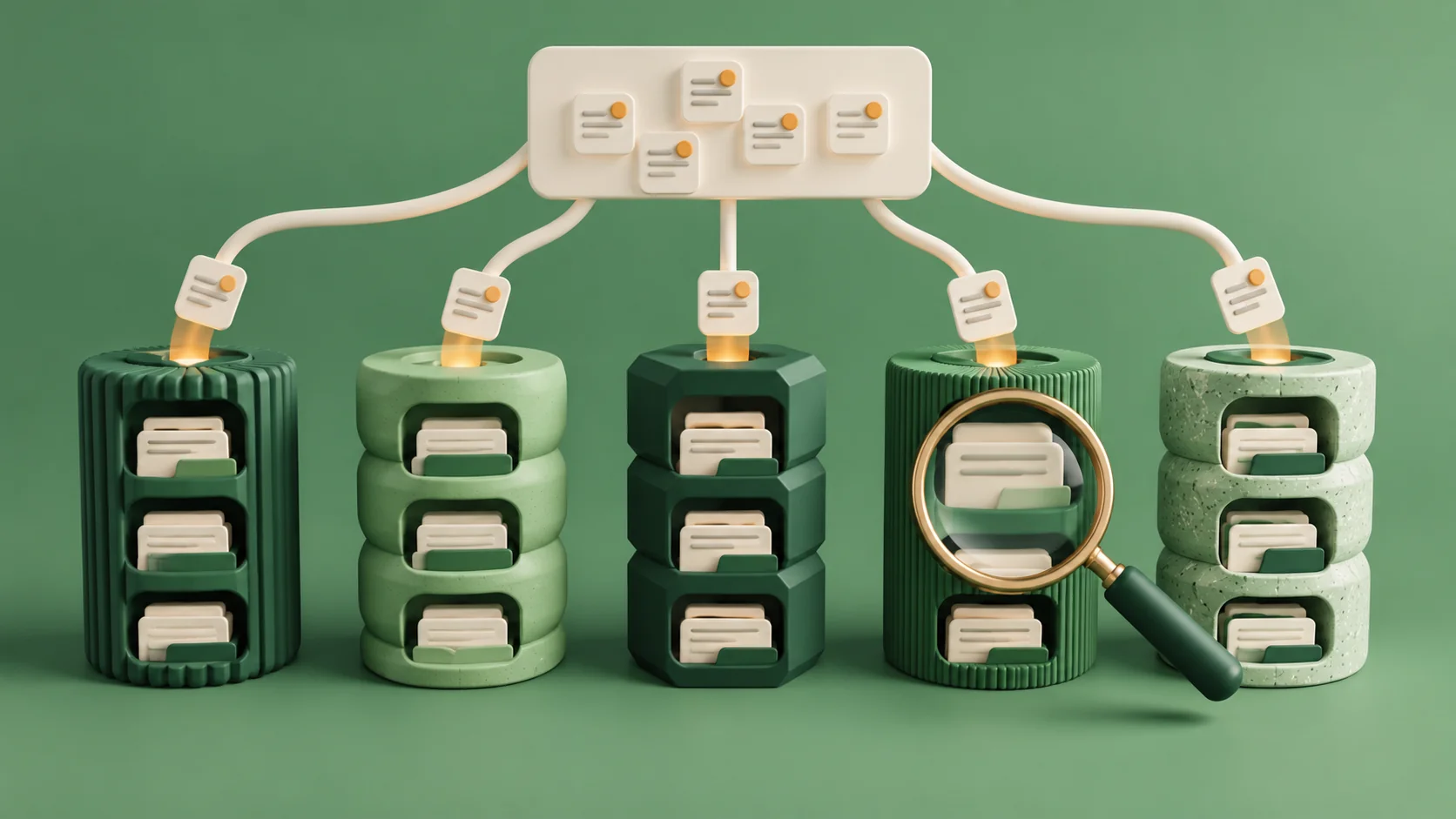
This comparison covers integration event logs, not WordPress email-log plugins or CF7 submission analytics. None of these platforms is assumed to ship a native CF7 connector. You need an application logger, collector or supported ingestion path. Features and licensing below are based on official sources reviewed October 20, 2026, without invented benchmarks or hands-on product ratings.
Define an event that answers a lead-handling question
A useful connector event might contain a timestamp, environment, form identifier, synthetic correlation identifier, processing stage, outcome and destination status code. It should not need the inquiry’s message, email address, authorization header or full payload to answer “did this delivery attempt fail?” Decide that minimal schema before choosing a search interface.
Distinguish a CF7 submission result, a connector attempt and destination acceptance. Those are separate observations. Link the stages with an intentionally designed identifier rather than joining on personal data. Use the delivery tooling comparison for retry and queue decisions, and the email-log plugin comparison when the actual question concerns WordPress mail calls.
Five-product decision table
| Product | Useful starting fit | License and cost boundary | Important tradeoff |
|---|---|---|---|
| Grafana Loki | Existing Grafana workflows | AGPLv3 core; hosting and commercial offerings separate | Label and query design |
| OpenSearch | Indexed event search and analytics | Apache 2.0 project; managed infrastructure costs extra | Cluster and ingestion operations |
| Graylog | Centralized operator log workflows | Graylog Open under SSPL; paid editions separate | Edition and supporting stack |
| Seq | Structured application event investigation | Commercial product; free Individual license has limits | Users and storage allowances |
| VictoriaLogs | LogsQL-based self-managed event search | Apache 2.0 core; enterprise support/features separate | Query and collector fit |
Grafana Loki: use stable labels and inspect event details
Grafana Loki indexes log labels rather than every word of each event. LogQL supports searching and processing the corresponding log content. That model fits a team already using Grafana that wants to investigate a connector alongside other services.
Strength: stable labels such as service and environment can define a clear starting point for an investigation. A synthetic delivery identifier can remain in event content or supported structured metadata rather than creating a new stream for every lead. This is a design recommendation based on Loki’s indexing model, not a measured capacity claim.
Limitation: poor label choices create unnecessary streams and operational cost. Review ingestion, storage, retention and authentication as part of the deployment. The core license is AGPLv3; self-hosted software does not eliminate infrastructure expense. Grafana Cloud and enterprise services are separate commercial choices. Do not import pricing or feature assumptions from one deployment model into another.
OpenSearch: indexed search with a deliberate ingestion pipeline
OpenSearch provides an Apache 2.0 search and analytics platform. Its log-ingestion documentation illustrates a pipeline involving a collector, Data Prepper, OpenSearch and Dashboards. The example is infrastructure guidance, not a CF7 integration recipe.
Strength: teams that need indexed event fields and broader search analytics can model a connector’s processing stages in a searchable index. That can support questions across several receiving services when the events use consistent field names and timestamps. Existing OpenSearch expertise is a substantial part of the fit.
Limitation: you own mappings, index lifecycle, retention, resource sizing, access and collector operation in a self-managed deployment. A small contact-form workflow can be a poor reason to introduce a new cluster. The open-source project has no mandatory software subscription, while infrastructure, managed services and support are separate expenses. Pilot realistic event volume and queries; do not assume a search engine automatically gives you an accurate lead count.
Graylog: centralized collection for an operator team
Graylog’s product documentation describes centralized collection, parsing, enrichment, search and operational analysis. It can suit a team that wants a shared log-management workflow across applications rather than a separate search experience for each receiver.
Strength: a structured ingestion and investigation process can make a connector’s events accessible to the people handling delivery problems. Establish a small set of normalized fields and an ownership rule for failed stages. Treat those as your workflow design, rather than attributing automatic CF7 lead classification to the product.
Limitation: editions differ, and the service has its own supporting infrastructure. The current Graylog Open product page states that Open is free to use under SSPL, with self-managed infrastructure. SSPL should not be confused with a permissive open-source license. Enterprise and Security capabilities, hosting and support have different commercial boundaries. Confirm the exact edition for advanced reporting, retention and governance requirements instead of assuming every documented Graylog feature belongs to Open.
Seq: investigate structured application events
Seq centers its log experience on structured application events and supports investigation, queries, dashboards and alerts. It is a plausible fit when the receiving application already emits useful named properties and developers need to follow one processing path through them.
Strength: a deliberately structured event can let operators move between a delivery identifier, stage and outcome without searching an unstructured message blob. Select a supported ingestion client or protocol for the receiver’s language. Do not assume a familiar .NET logging example means a PHP WordPress plugin is already connected.
Limitation: Seq is a commercial product, and its Individual license permits one person to access the interface. Sharing credentials does not turn it into a team license. The current plan matrix also specifies storage allowances, so “unlimited retention time” does not mean unlimited storage. Multi-user operation needs the appropriate subscription. Model the number of investigators and retained data before using a workstation trial as the production cost estimate.
VictoriaLogs: a log-focused database and query language
VictoriaLogs offers single-node and cluster deployments, log ingestion options, a built-in exploration interface and LogsQL. It can fit a team that wants a dedicated self-managed log database and is willing to learn its query model.
Strength: starting with a narrowly scoped receiver log stream makes it possible to evaluate the built-in search and the available Grafana integration without immediately redesigning every service. Test the collector format and the operators’ actual questions, including how to find one failed attempt and inspect the events around it.
Limitation: query familiarity, collectors, access controls, retention and operational monitoring still require ownership. The core is Apache 2.0, with separate enterprise support and features. Vendor resource-efficiency claims are not independent evidence for your workload; this comparison makes no speed, memory or storage ranking. Use your own sanitized event sample to assess fit and plan capacity.
Run a pilot around one failed delivery
Begin in an isolated test environment. Send synthetic events for a successful attempt, a rejected destination request, a timeout and a retried delivery. Include a known identifier and stage, then ask another operator to find the relevant event without a developer explaining every field. Confirm that the timestamp and environment are unambiguous.
Check missing and duplicate events as well as query results. A collector can fail, a buffer can fill and retries can repeat an event. Log event counts therefore do not automatically equal unique inquiries. If you need a lead report, reconcile against the system that actually owns the lead record and document the deduplication key.
Inspect access permissions, redaction and deletion behavior with harmless sample values. Estimate retained volume using realistic event size and frequency, including failure bursts. Choose retention based on investigation needs, then verify it is enforced. A platform that stores everything forever can make a small integration harder to operate and more expensive to explain.
Choose the platform your team can maintain
Choose Loki when stable-label log search fits an existing Grafana operation. Consider OpenSearch for indexed analytics with an experienced search-platform team, Graylog for a shared centralized operator workflow, Seq for structured application investigation with clear user licensing, or VictoriaLogs for a dedicated LogsQL-based service. Existing expertise and a reproducible investigation matter more than a generic feature count.
We publish CF7 Analytics. Our free Svetlik Analytics for Contact Form 7 provides submission statistics and trends, while these platforms concern separately instrumented integration events. Neither layer alone proves inbox delivery or destination acceptance. Use the form testing checklist to connect the observations into an evidence-based review.
Sources: linked official product documentation, plan matrices and repository licenses above, checked October 20, 2026. No native connector, benchmark result or compliance guarantee is inferred.